


California’s Engineered Stone Proposal: 5 Things Fabricators Should Be Thinking About Right Now
If you’re in the stone fabrication business, you’ve probably heard some of the conversation coming out of California about engineered stone. Depending on where you heard it, you may have also walked away thinking California has already banned quartz.
That’s not where things stand today.
On September 16, Cal/OSHA released a draft of a possible new rule involving the fabrication of artificial stone products containing more than 1% crystalline silica. The process is active, but the September 16 document is still a draft and has not been adopted as a final rule. Cal/OSHA is accepting comments on the draft through September 30.
The reason behind the proposal is serious. California regulators are focused on worker exposure to respirable crystalline silica and the risk of silicosis among engineered stone fabrication workers.
For fabricators, I believe the right approach is to pay attention without getting ahead of what we actually know. There will be plenty of noise around this issue. Your responsibility is to separate that noise from the facts, keep employee safety a priority, stay informed as developments unfold, and communicate accurately with your employees and customers.

1. Follow the Source, Not the Headline
With that in mind, here are five areas every countertop and surface fabrication business should be watching as this develops:
Headlines, social posts, and opinions about what California is doing, and what it could mean for the rest of the country, will be heavy over the next few months. They will come from law firms, industry groups, manufacturers, trade publications, and the general media, each potentially approaching the issue from a different perspective or interest in the outcome.
As a business leader, keep your focus on the facts and official resources, and rely on credible, verified information when you communicate with your employees and customers.
A few things I recommend keeping in mind:
- Start with Cal/OSHA and other official sources for regulatory updates.
- Consider the source and its reliability when reading headlines, articles, and social posts.
- Check the date. This is a developing issue, and information can change.
- Separate facts from opinions, predictions, and advocacy.
You don’t need to ignore the conversation. You need to manage its impact on your business, understand the facts, and keep your stakeholders involved.
When it comes to strategy and communications, let the industry experts help you!
2. Know Your Products and Information Sources
This is a good time to make sure your team understands the products you’re selling and knows where the information about them comes from.
Different quartz brands can have different compositions and specifications. Something you’ve read about one product, manufacturer, or category shouldn’t automatically be applied to another.
That means knowing:
- What each manufacturer and supplier says about its products and brands, so your team shares accurate information.
- Where your team and customers can find current technical, safety, and product information, ideally on your own website.
- Whether the information you’re sharing actually applies to the specific product or brand in question, rather than to an entire material category.
- How your team should respond when they don’t know an answer, including how to verify it before responding and where to send customers who want to learn more.
Don’t make claims about any particular quartz brand unless you have a credible source to support them. If you tell a customer something about a specific brand, product, or manufacturer, identify the source and make it available on your website. Manufacturer documentation and other authoritative sources should be your starting point.
For questions about silica, silicosis, or potential health effects, rely on qualified, authoritative sources and point employees and customers to them.
Most of the companies my team and I work with use the Natural Stone Institute as an industry resource for silica and safe-fabrication information. Government resources, including OSHA and NIOSH, should also be referenced when communicating about workplace exposure, health risks, and employee-safety requirements.
3. Lead the Conversation with Your Customers
This may be one of the biggest communication challenges fabricators face.
A homeowner or trade partner may walk into your showroom after seeing a headline and ask, “I heard quartz isn’t safe and is getting banned. Is that true? Is it safe?”
That’s where context matters.
The issue Cal/OSHA is addressing involves respirable crystalline silica, very small particles that can become airborne when silica-containing materials are cut, ground, polished, or otherwise worked. OSHA and NIOSH frame the concern around workers who can be exposed to that dust during manufacturing, fabrication, finishing, and installation.
That’s an important distinction. A serious worker-safety issue shouldn’t automatically become a message that quartz is “the new asbestos,” and concerns about silica exposure shouldn’t be dismissed just because some of the surrounding conversation is inaccurate or exaggerated.
You can give customers that context without minimizing the worker-safety issue or stretching it into product claims you can’t support.
When customers have questions, keep a few things in mind:
- Understand where the question is coming from. Ask what they’ve heard or read, and point them to credible resources to learn more.
- Don’t minimize legitimate worker-safety concerns. Be ready to explain what your company does to protect employees and meet safety requirements.
- Don’t speculate about what California will ultimately do, or what might happen elsewhere. Stick to what has actually happened.
- Don’t turn your salespeople into scientists, doctors, lawyers, or regulators. Give them the information and resources to answer reasonable questions, and show them where to send anything outside their expertise.
- Be proactive. Don’t wait for customers to ask. Consider getting ahead of it with an email, newsletter, website resource, or sales materials that explain what you know, where it comes from, and what it means for your operation.
Your salesperson doesn’t need to win an argument about quartz or tell a customer how to feel about a material. The goal is to lead the conversation responsibly, share accurate product and brand information, offer credible resources, and help customers choose the material that’s right for their project.
4. Look at What You’re Already Saying
Pay close attention to what your company is already communicating about quartz, engineered stone, silica, and fabrication, especially on your website, product and brand pages, social media, FAQs, sales materials, showroom displays, and sales messaging.
Ask a few simple questions:
- Are we making claims about a particular material, brand, or product?
- Where did that information come from, and is the source reliable and current?
- Are our salespeople and marketing materials saying the same thing?
A draft being released doesn’t mean you have to rewrite your website or change your messaging. It means knowing what’s already out there and getting ahead of the situation to keep your employees, customers, and business protected.
When an industry issue draws attention from the media, other industries, or lawmakers, something written years ago can suddenly be read through a completely different lens. Reviewing what you’re communicating, aligning your messaging, and pointing to trusted resources puts your business in a stronger position.
Consistency matters when the market gets noisy.
5. Don’t Lose Sight of Employee Safety
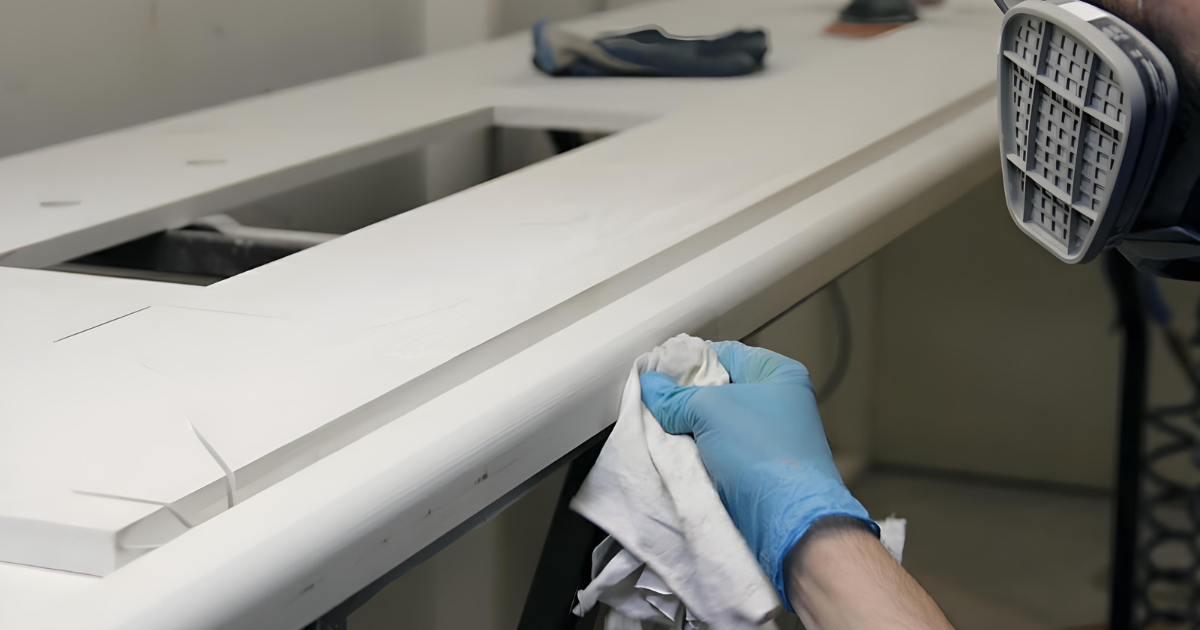
With all the attention on what California may or may not do next, we shouldn’t lose sight of what started this conversation: employee safety.
A proposed rule doesn’t replace the workplace-safety requirements that already apply to your business. Fabricators should stay current on OSHA requirements, or applicable state-plan requirements, including those involving respirable crystalline silica. That part doesn’t depend on what ultimately happens with the California proposal.
A few things worth keeping on your radar:
- Stay current on and follow the OSHA or state-plan requirements that apply to your operation, along with established employee-safety practices.
- Keep employee safety and silica-exposure prevention at the center of the conversation.
- Make sure everyone in your company completes a silicosis awareness course.
- Use qualified safety professionals when you need help evaluating your operation or understanding specific requirements.
- Don’t wait for the outcome in California to take your existing worker-safety responsibilities seriously.
This isn’t a call for your marketing team, a salesperson, or an article on the internet to make. For guidance specific to your operation, go to the appropriate government resources and qualified safety, regulatory, or legal professionals.
I’ve spent a lot of years in and around the surfaces industry, and I’ve watched complicated issues get reduced to simple headlines. We understand the details because we live in this business every day. A homeowner may see six words on a screen and then walk into your showroom expecting your salesperson to explain them.
Fabricators don’t need to have every answer right now. What matters is understanding the current situation and then training, protecting, planning, and communicating well enough to protect your business, your customers, and your employees.
Where Marqet Fits
At Marqet Group, we work with fabricators and other surface-industry companies on strategy, positioning, messaging, and marketing, as well as digital platforms like web development, lead generation, and product catalogs. We aren’t attorneys, regulators, safety consultants, or medical professionals, and we don’t try to play those roles.
Where we help is the communication side. When an industry issue creates confusion in the market, we help companies align what customers are hearing, what employees and salespeople are saying, and whether the message going out is clear, accurate, and consistent.
If that’s something your company is working through, we’re always happy to have a conversation.