A fabrication shop can do excellent work and still struggle to show new buyers why it belongs on their shortlist. Craftsmanship matters, but buyers have to find evidence of it before they can choose it.
That is the distinction between a performance problem and a representation problem. A performance problem calls for better execution. A representation problem calls for making the quality, capabilities, and experience already inside the business visible to people who do not know it yet.
Before investing in more marketing, it is worth asking which problem you are trying to solve.
When the owner carries the reputation
Many shops grow through personal relationships. The owner knows the builders, answers the difficult questions, and helps customers feel confident about the work. Those relationships are an asset.
The limitation comes when that knowledge stays with one person. A designer who has worked with you may understand exactly where you excel. A designer discovering your website for the first time may see only a list of materials and a phone number.
The business has the capability. The new buyer has not seen enough to recognize it.
Look at what a prospective customer can learn without speaking to you. Can they tell which projects you take on? Can they see relevant finished work? Do they understand your service area and process? Can they find a clear next step?
If those answers are hard to find, you may be asking every new buyer to start the conversation without the confidence your existing relationships already have.
The opportunity is easy to miss
You can count the inquiries that arrive. It is harder to see the opportunities that never reached you.
A homeowner may leave because the website does not explain what happens after requesting a quote. A builder may move on because there is no clear account of your production capabilities. A designer may look elsewhere because the material information does not help them evaluate a specification.
These are possible points of friction, not proof of a specific amount of lost revenue. The useful next step is to inspect the experience and measure what you can: which pages buyers visit, where inquiries originate, and whether the resulting conversations fit your business.
Make the business easier to understand
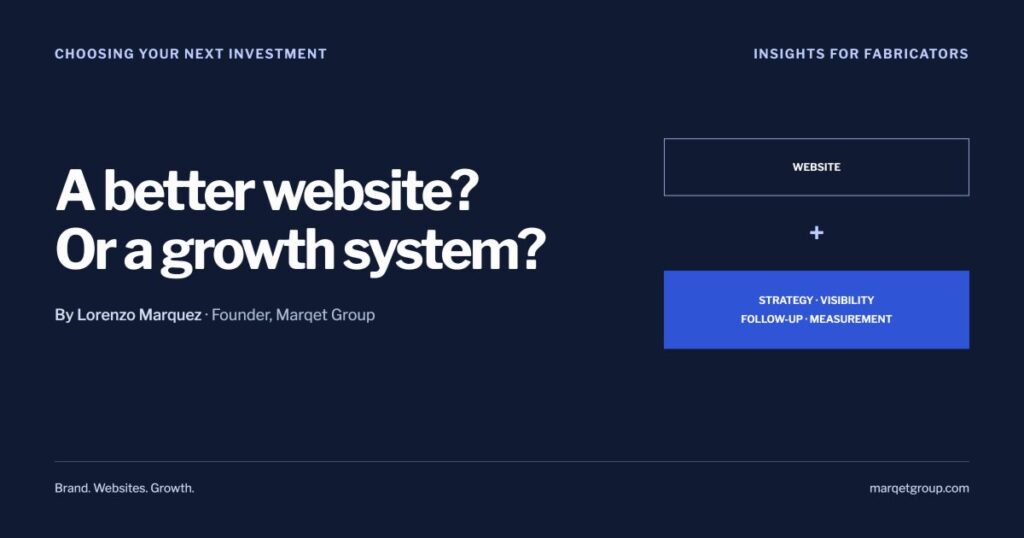
A stronger representation of the shop connects three practical pieces.
Positioning. Explain who you serve and why your approach fits their needs. A homeowner planning one kitchen and a builder evaluating a production partner need different evidence. Give each a reason to keep reading.
Systems. Make that evidence usable. Connect project examples, accurate material information, a clear process, and an inquiry path that gets the right details to the right person. Follow-up matters as much as the form.
Visibility. Help buyers discover those resources through relevant search, local business information, useful content, and the relationships that already support the company. More traffic is valuable only when the experience supports the next step.
The aim is to give new buyers access to the clarity and confidence that otherwise require a conversation with the owner.
Start with the buyer’s first five minutes
Review the website as someone who has never met you. Pick one buyer group and one project they might bring.
- Can they recognize that you serve someone like them?
- Can they find relevant proof of your work?
- Can they understand what working with you involves?
- Can they take a useful next step without guessing?
Then compare what the website communicates with what your sales team explains on a good first call. The difference is a practical starting point for improvement.
Your shop may need better marketing, a clearer website, a more consistent follow-up process, or a combination. A diagnosis should establish that before a list of services does.