A good showroom helps a buyer imagine a project, understand the options and feel comfortable asking for help. Your website should do those jobs before someone walks through the door.
For a countertop fabricator, that means more than showing attractive kitchens. A visitor needs to understand where you work, which projects fit your shop, how to evaluate materials and what happens after an inquiry. A website that answers those questions gives the sales conversation a better starting point.
The useful test is simple: could a buyer who has never met you take a sensible next step without calling to ask how your business works?
Show the work your next buyer wants to see
Choose project examples that reflect the work you want more of. A homeowner planning a kitchen needs different evidence from a builder evaluating a fabrication partner. A large image can attract attention, but the details explain why the project is relevant.
For a residential project, identify the material, the application and the design decisions that shaped the result. For a commercial or builder project, explain your scope and the coordination involved. Use project details you can verify and have permission to share.
A short, accurate caption often does more than another gallery of unexplained photographs. It helps the visitor connect the finished space with the capabilities of the team behind it.
Make material research useful
Material browsing should help people narrow their questions. Clear product names, readable specifications and a consistent way to explore colors or finishes can make a conversation more productive.
Be precise about what the website is showing. A material you can source is not necessarily a slab you have in stock. A photograph does not establish current availability, final pricing or suitability for every application. Explain those distinctions where buyers make decisions.
If a visitor likes a material, give them a next step that preserves that context. They might ask about the product, save the page or include its name in a project inquiry. The sales team should not have to start the conversation from zero.
Choose the next step for each page
A project page may lead to a quote request. A showroom page may invite a visit. A trade page may offer a conversation about an upcoming specification. Each page should make its most useful next step clear.
A scheduling link should reflect a real booking process. If the team needs to confirm the appointment manually, call it a visit request and explain what happens next. An inquiry and a confirmed appointment are different commitments.
Keep the first form proportionate to the request. Ask for the information the team needs to respond, then collect drawings, measurements or further details when they become necessary. Test the form on a phone, including its error messages and confirmation.
Give people a reason to trust the process
Buyers need to understand the work between the first conversation and installation. A plain-language outline can explain consultation, material selection, estimating, templating and installation, with room for the differences between project types.
Support that outline with real work and relevant customer feedback. Avoid promising a turnaround time or result that your operations cannot consistently support. Clear expectations are part of a credible website.
The handoff matters too. Decide who receives each inquiry, who responds and how the team records the outcome. A better website cannot compensate for a request that sits in an unattended inbox.
Walk through your website as a new buyer
Use your phone and choose one realistic project. Then work through these questions:
- Can you tell whether the business serves your area and project type?
- Can you find relevant finished work and understand the fabricator’s role?
- Are material names and availability expectations clear?
- Is the next step easy to find and use?
- Does the form explain what will happen after submission?
- Does the team receive enough context to respond helpfully?
Record the first point where you hesitate. That is often a more useful starting point than deciding the entire site needs a new look.
Improve the buying experience before adding more traffic
A website does not have to answer every technical question. It should help a buyer recognize a fit, find credible information and begin the right conversation.
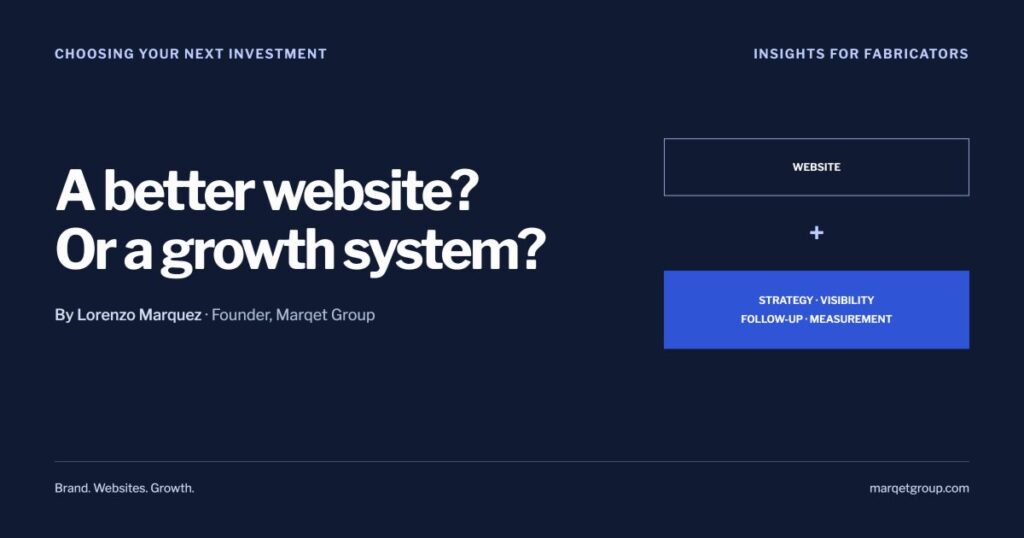
If those foundations are missing, a focused website project may be the right investment. If the site already supports them but too few suitable buyers discover it, the next issue may be visibility, positioning or consistent marketing. Compare a website project with a complete growth system before deciding what to build next.